
Monday, October 24


Sunday, October 23
God's Victory

Three days after French troops under the command of Jean Baptiste de Vimeur, Comte de Rochambeau, and the Marquis de Lafayette helped George Washington's ragged forces
defeat the British Army, the men celebrated the formal surrender of Lord
Cornwallis. The British band
played the popular song "The World Turned Upside Down" as they
stacked up their arms.
The last major fighting of the American War for Independence
had somehow ended in a resounding American victory. Washington and the others could not help but recognize God's
hand in the victory. Indeed, it was when the American forces were at their
weakest, that victory had finally come. Accordingly, Washington
issued orders to the army that "Divine service is to be performed in the
several brigades and divisions. The commander-in-chief recommends that the
troops not on duty should universally attend with that seriousness of
deportment and gratitude of heart which the recognition of such reiterated and
astonishing interpositions of Providence demand of us."
That celebration of God's good providence occurred on this day in 1781.
Saturday, October 22
Texas: A Whole Other Country

Friday, October 21
Let There Be Light

On this day in 1878, Thomas
A. Edison invented a practical incandescent lamp in his laboratory at Menlo
Park, New Jersey. "The longer
it burned," he said, "the more fascinated we were…there was no sleep
for any of us for forty hours."
Thursday, October 20
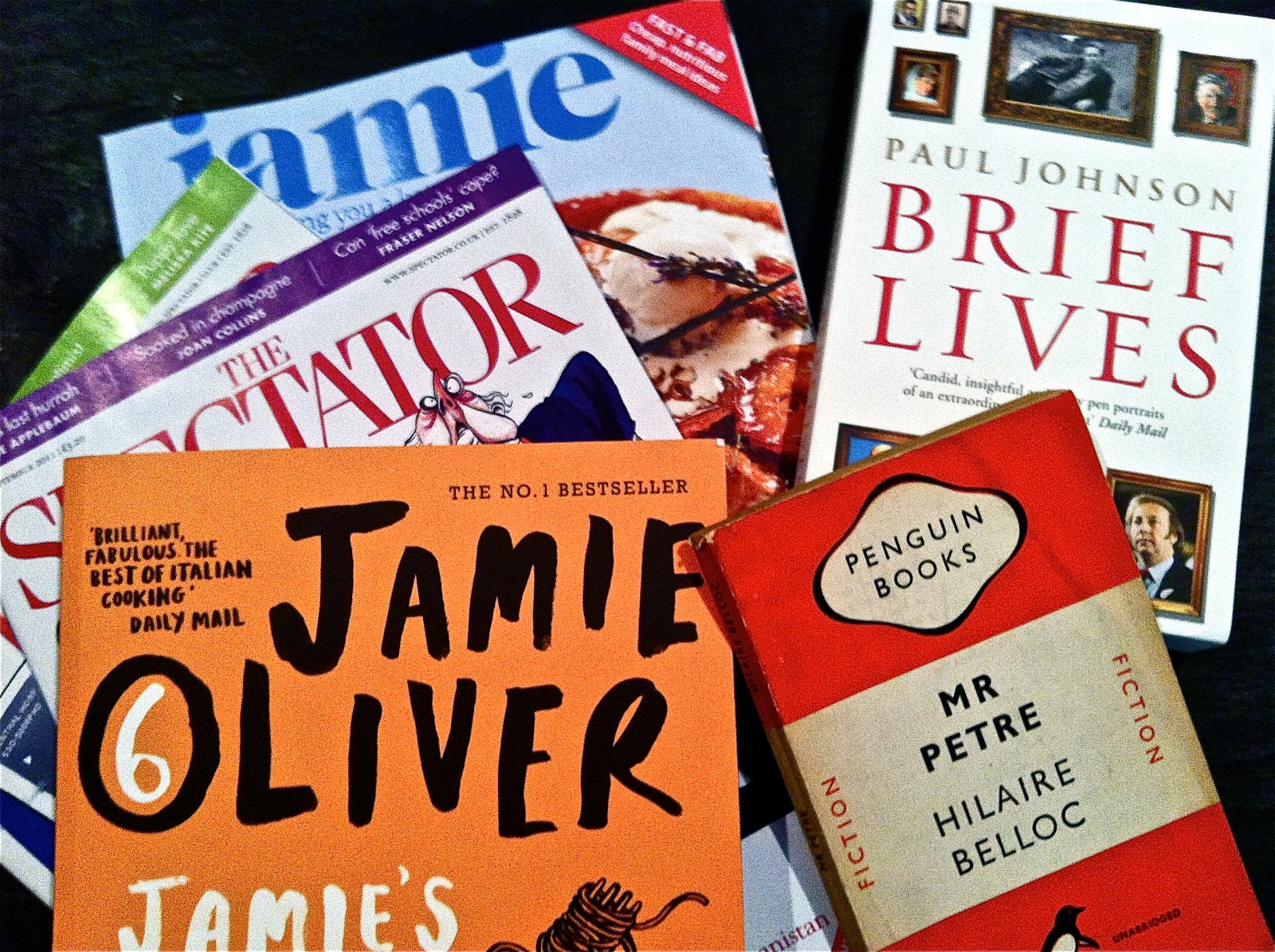
Johnson's Latest

Wednesday, October 19
The Louisiana Treaty

The United States Senate ratified the Louisiana Purchase
Treaty by a vote of 24-7 on this day in 1803. The vast
region encompassed more than 800,000 square miles of territory and comprised
present-day Arkansas, Missouri, Iowa, Minnesota west of the Mississippi River,
North Dakota, South Dakota, Nebraska, Oklahoma, nearly all of Kansas, the
portions of Montana, Wyoming, and Colorado east of the Rocky Mountains, and
Louisiana west of the Mississippi River as well as the city of New Orleans. At the time of
purchase, Thomas Jefferson was concerned about the constitutionality of making
a land acquisition without adding a covering amendment to the U.S.
Constitution. The law of the land, however, did give the president
treaty-making power, and the Louisiana Purchase was ratified into law as a
treaty by the U.S. Senate. The Louisiana Purchase stands as the largest area of
territory ever added to the U.S. at one time.
Tuesday, October 18
From Depths of Woe

William Cowper (1731-1800), the pastoral English poet, collaborated with the curate John Newton in publishing the Olney Hymns—a classic collection of Evangelical and Reformed hymns. Cowper who generally wrote about simple pleasures of country
life and expressed a deep concern for human cruelty and the suffering of the innocent, was born in
Great Berkhampstead, Hertfordshire. Though he suffered periods of acute
depression he lived with the evangelical cleric Morley Unwin and his wife,
Mary. In 1773 Cowper was seized by a severe despondency, rooted in religious
doubts and fears that plagued him all his life. It was apparently the care of
Mrs. Unwin, who encouraged him to compose poetry, that enabled him to recover.
And thus, out of the depths of woe was the church given the great gift of
his verse.
Monday, October 17
Better to Be Underestimated

Known for his witty style, the amazingly prolific author G.
K. Chesterton wrote in many genres, including fiction, biography, poetry,
theology, history, as well as a myriad of essays. He was one of the most beloved
writers in England during the first part of the 20th century.
On this day in 1912, biographer Hugh Lunn interviewed
Chesterton for the Hearth and Home magazine. He began with a description of the great man, “Everyone
knows Mr Chesterton's appearance, a good portly man, i' faith, and a
corpulence, like Falstaff. His writings, too, have become familiar, winning
many disciples, especially among the young. At Oxford the Chestertonian and the
Shavian are well-known types: the Shavian enthroned above human emotion is
clever, but a prig; the Chestertonian, less brilliant, is more likeable. He
doesn't care for advanced ideas, but he would like to combine wit and probity.
So he welcomes a writer who defends old modes of thought with humor, and
attacks modern thinkers on the ground that they are antiquated bores in
disguise.”
Lunn was soon to discover that, with Chesterton, there was
much more than met the eye—despite the fact that his rotund figure was
sufficient to fill the eye. With a
glint of good humor, Chesterton began with characteristic words, “I am always
ready to be interviewed, for I hold the theory, nowadays completely
forgotten—as forgotten as this matchbox was still this moment (fishing a box
out of a bowl on the mantelpiece)—the theory that the Press is a public agora.
I should not refuse an interview even to a paper owned by one of those
capitalist millionaires, whom I hate. Nowadays the Press merely echoes the
powerful; its real aim should be to give the public a chance to state its
views.”
Lunn could hardly get a word in edgewise, so the interview
turned into something of a monolog—a forum for the great man to hold forth on
all manner of ideas, much like his writing, “And now what do you want me to
talk about? I am ready to give my opinion on any question, whether I know
something about it or not. No, I'm not an Imperialist in the modern sense; the
only theory of Imperialism that seems to me sound is Dante's. He defended the
Roman Empire as the best human government, on the definite ground that the best
human government would probably crucify God. Caesar had to be lawful; because
Christ had to be killed by law.”
With that, he paused with a smile to ask Lunn what questions
he really wanted to put upon the table. He should not have bothered, before he
could reply, Chesterton was off again, “I do not believe in Cosmopolitanism,
you know: nowadays it's either run by financiers for their own profit, or it's
the product of Atheistic Socialism, as in Germany. Christ didn't come to bring
peace among the nations. When He said that a man should turn the other cheek, I
fancy He meant that a man, when attacked, should humiliate his enemy by
treating him with sudden and unexpected contempt.”
And so it went for nigh on an hour. Lunn had to admit afterward, “I had altogether
underestimated the tornado of thought and creativity and imagination that the
jolly figure of Chesterton contained.”
To which Chesterton later retorted, “It is always better to be
underestimated than overestimated—that way, all good things are taken as if by
surprise and are therefore all the more appreciated.” Appreciated, Chesterton surely is.
Tuesday, October 4
Subscribe to:
Posts (Atom)